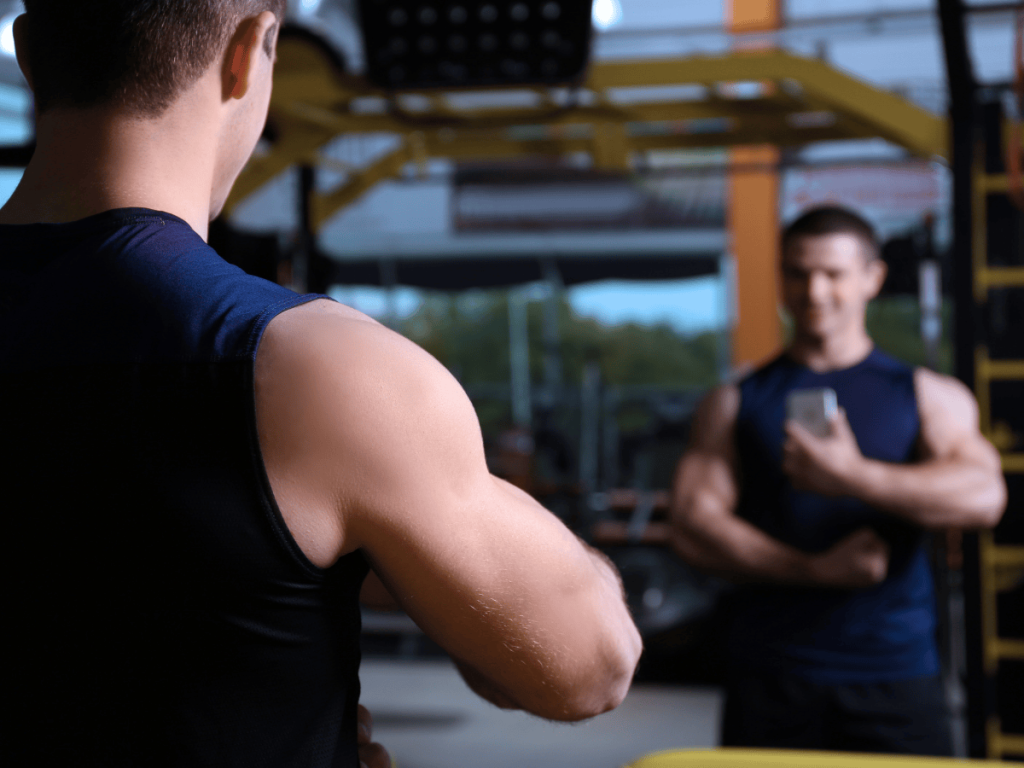
If you’ve been training consistently for a few months and still feel unsure whether you’re making progress, you’re not imagining it. The gap between effort and visible results can feel maddeningly wide, especially when the scale refuses to budge.
But that number on your bathroom floor is one of the least useful tools for measuring what’s actually happening to your body. More and more gym-goers are turning to something far more revealing: a printed, physical record of their progress photos.
It sounds almost too simple. And yet the effect it has on long-term consistency is difficult to overstate.
The Scale Doesn’t Tell the Whole Story
When you’re putting in serious work at the gym – lifting heavier, eating smarter, sleeping better – your body is changing in ways a scale can’t capture.
Muscle is denser than fat, which means you can drop a clothing size while your weight stays exactly the same. Body recomposition often appears as minimal scale movement, even while your physique is transforming.
This tendency is one of the main reasons people quit when they’re actually making good progress. They see the same number week after week and assume it isn’t working.
Published research found that people who tracked their fitness journey with regular visual documentation reported significantly higher program satisfaction and better long-term adherence compared to those relying on scale measurements alone.
Your body shape, muscle definition, and posture don’t fluctuate the way a morning weigh-in does.
Here’s what the scale measures versus what it misses:
| What the scale captures | What progress photos capture |
| Total body weight | Muscle definition and shape |
| Water retention fluctuations | Changes in posture and stance |
| Short-term dietary changes | Body recomposition over time |
| Nothing visual | Clothing fit and proportions |
That gap between the two columns is exactly where people lose confidence and quit. Photos fill it.
Why Physical Beats Digital
There’s a psychological difference between a photo you’ve scrolled past a hundred times on your phone and one that’s hanging on your wall or sitting in a physical album.
Physical objects hold more weight. A printed layout of your training year – twelve months of consistent photos showing real, directional change – occupies your environment in a way that a folder on your phone never can.
You see it when you walk past the kitchen. You see it before you go to bed. It becomes a low-effort, constant reminder that you’re building something real.
This is why a growing number of serious gym-goers have started using Mixbook photo calendars to organize their progress into a physical format.
Rather than a loose collection of before-and-after shots, the calendar structure forces a month-by-month visual record where the direction of change becomes impossible to ignore.
When motivation dips – and it always dips at some point – that calendar on the wall does work that willpower can’t.
You’re not relying on memory or on feeling. The evidence is right there.
Making It a System, Not Just a Habit
The reason most people don’t stick with progress photos is that they treat it as something they’ll remember to do. That’s an intention, not a system – and intentions tend to dissolve after the third week.
The fix is to attach your photo session to something that already happens reliably. Options that work well:
- The first morning of every month, before breakfast
- The morning after your scheduled weekly weigh-in
- A recurring phone reminder with a specific time slot locked in
- The day before you start a new training block or programme
It doesn’t matter which trigger you pick, as long as it removes the decision from the equation each time.
Once you have a collection building, don’t leave the photos sitting in a digital folder. Print them. Arrange them in order. Put them somewhere visible.
The UK’s top fitness influencers have understood this for years – the people who stay consistent with their training long-term aren’t the most motivated ones.
They’re the ones who’ve built structures that keep them accountable even when enthusiasm fades. A meta-analysis confirms that habit formation interventions work best when paired with regular, visible feedback.
A set of printed photos arranged in a daily format each month provides you with both.
When you hit a plateau – and you will hit plateaus – flipping back through six months of your own photos is more useful than almost any other tool. It shows you that stalls are a normal part of the pattern, not evidence that it has stopped working.
Why Seeing the Change Matters
There’s a straightforward reason visual tracking works where other methods fall short: our brains are built to respond to evidence we can actually see.
When you notice a real change – broader shoulders, a flatter stomach, a stance that looks more capable than it did six weeks ago – your brain registers that as success. That recognition reinforces the actions that got you there. It’s not about vanity; it’s about feedback.
Research shows that habit strength, not motivation, is what drives long-term physical activity. Motivation is reactive and fleeting.
Habit strength, built through consistent self-monitoring paired with visible feedback, is what keeps people training when the initial excitement has worn off.

Progress photos are a low-tech, highly effective version of exactly that kind of feedback loop. Look how Megan Grubb’s fitness journey developed over time.
Documenting the process wasn’t just content strategy – it was accountability. Seeing the progression kept her honest with herself and her audience in ways that numbers alone never could.
The problem with keeping photos buried in a phone gallery is that they don’t actually function as feedback. You have to go looking for them, compare them in dim phone light, and pinch and zoom to spot any difference. That’s enough friction to break the loop before it can take hold.
How to Take Progress Photos That Actually Show Results
Taking good progress photos doesn’t require special equipment. What it does require is consistency, because inconsistency kills comparisons before they start.
Pick a specific day and time you can commit to every fortnight or every month.
The time of day matters more than most people expect – your body looks noticeably different first thing in the morning versus after a full day of eating and movement. Morning, fasted, tends to give the most consistent baseline.
Follow the same setup each time to make your comparisons meaningful:
- Same location – a blank wall or familiar background removes distracting variables
- Same light source – natural window light is reliable; avoid overhead bathroom lighting which shifts depending on time of day
- Same clothing – fitted enough to show your shape, not so tight it distorts
- Three angles – front, side, and back give you the full picture
- Relaxed posture, no forced flexing – natural shots reveal more gradual change than posed ones
Monthly is a better cadence than weekly for most people. Weekly photos are too close together to show noticeable changes, and normal day-to-day fluctuations can make you feel like you’re going backwards when you’re not. Monthly allows the body enough time to produce results worth comparing.
Progress Is Slower Than You Think, and Faster Than You Remember
The frustrating truth about long-term training is that changes feel invisible as they’re happening. Day to day, you look basically the same to yourself. Your brain adapts to your appearance faster than your body changes.
Photos from three months ago look radically different from today when you put them side by side. The version of you in that first photo didn’t notice what was building. The version looking at it now can.
That’s the real value of printing your progress. Not just motivation or accountability – but perspective. And in a training culture that moves faster and louder every year, that kind of steady, documented perspective is harder to come by than it should be.
Start the process now. Take the first photo before it feels like there’s anything worth photographing. That’s the one that will matter most six months from now.