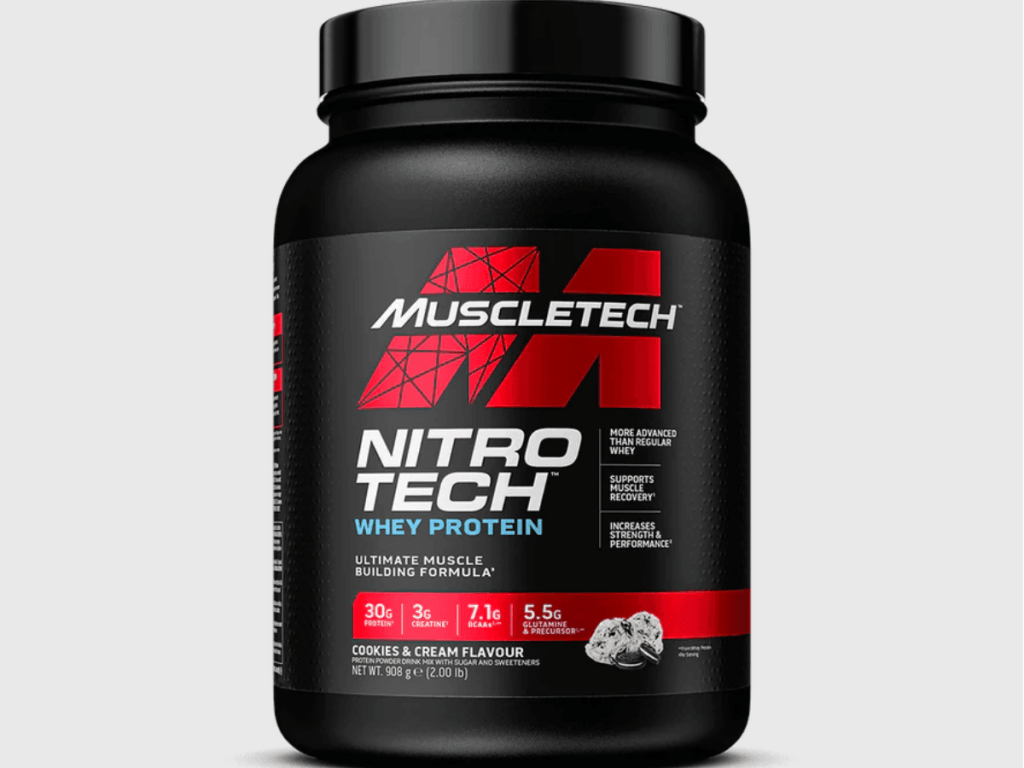
MuscleTech is firmly rejecting claims that its flagship Nitro Tech falls short on protein — and they’ve brought evidence to back it up.
In June, Malaysian supplement retailer Muscle Mania Club posted a video on Instagram and TikTok accusing the brand’s signature protein blend of failing to match its label claims.
The store has been on a rapid-fire spree of public callouts, saying it’s uncovered similar issues with other big-name supplement brands.
When it came to MuscleTech’s Nitro Tech Protein, Muscle Mania Club claimed to find a serious discrepancy.
According to the retailer, samples sent to ChemLab Malaysia allegedly came back with 12.98g of protein per 30g serving — which would work out to 19.9g in a full 46g serving size.
That’s a far cry from the promised 30g.
Questionable Testing and Missing Details
But here’s where the story starts to unravel. The test report shared by Muscle Mania Club was missing key details — such as the exact date of analysis and the name of the company tied to the sample.
The math also raised eyebrows. Muscle Mania Club’s own numbers claimed 14.3g of carbohydrates in a 30g sample of Nitro Tech Protein — but somehow no measurable sugar.
With the figures not adding up and the certificate either redacted or incomplete, it’s not surprising that MuscleTech labeled the claims “false and unfounded.”
Adding to the doubt, ChemLab reportedly refused to confirm the test results when contacted by Iovate Health Sciences, the parent company of MuscleTech.
Third-Party Tests Back Nitro Tech
To set the record straight, MuscleTech commissioned independent third-party testing from Eurofins on three separate batches of Nitro Tech Protein sold in Malaysia.
Every result hit the mark — and then some.
“Muscle Mania Club claims our Nitro Tech does not meet label claim — and they are wrong,” the company said on Instagram.
“Unfortunately, misinformation travels fast, but facts matter.
“And today, we’re going to share results from one of the most reputable third-party labs that validates our Nitro Tech meets protein label claim, each and every time, and for all the lots in question.”
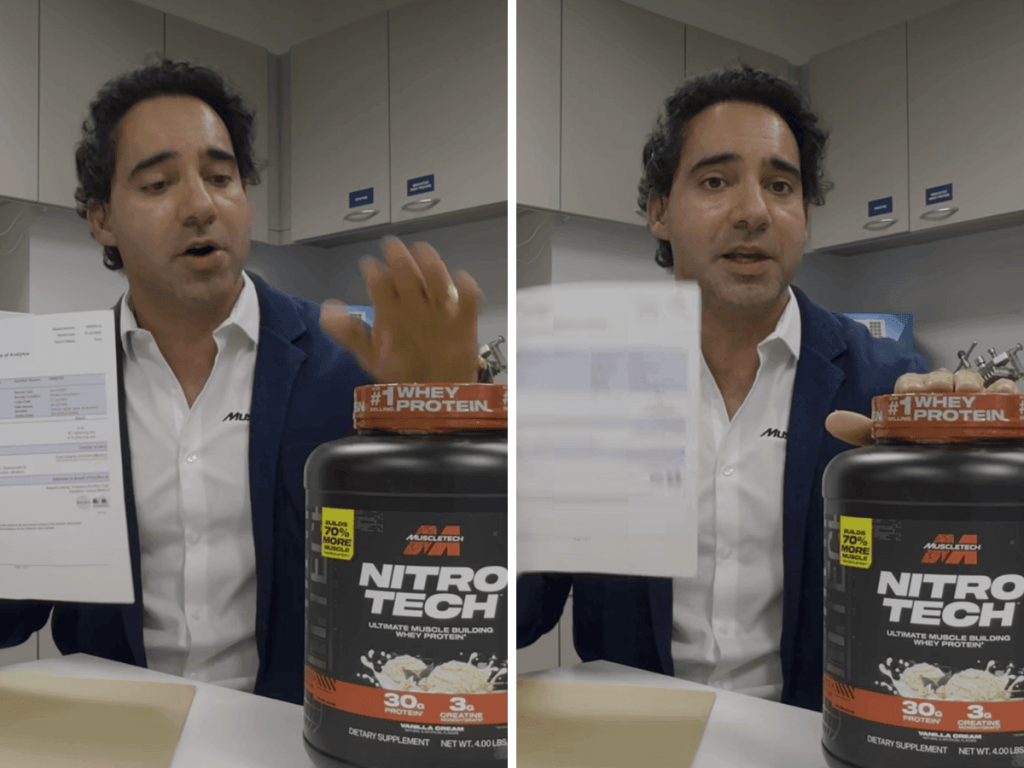
One test shared publicly showed Nitro Tech’s Milk Chocolate flavor in a 45.49g serving with full lot number transparency.
Using the Dumas method, the analysis found 36.7g of protein — well over the pledged 30g.
“So in this case, we’re exceeding the 30g of protein label claim, but there is a reason for that,” the statement continued.
“We have an additional 3g of creatine included. We do not count that within the 30g, which is why we’re exceeding the protein label claim… but with the lab method it will show up that way.
“Your trust matters, and whenever you pick up a MuscleTech product, you can be 100% confident that you’re going to get exactly what it says is on the label.”
Bigger Picture: Trust and Testing in the Supplement Industry
Product efficacy is a hot-button issue in sports nutrition. Recently, James Smith stirred controversy in the creatine gummy market with a series of exposés.
When done accurately and without bias, lab testing is a vital tool to hold brands accountable and protect consumers’ health and wallets.
In this case, however, the attack on Nitro Tech Protein appears more like a low blow aimed at discrediting MuscleTech rather than a genuine public service.
SEE ALSO: Larry Wheels Prepares to Launch Blast Pack — a “Condom-Sized” Pre-Workout Shot